What is a Nawal (Nahual) in Mayan Astrology?
Discover the meaning of the 20 Nawales (Mayan day signs) of the Tzolkin calendar, calculate your personal birth Nawal below, and learn how they shape your spiritual destiny.
Find Your Personal Mayan Nawal & Tone (1–13)
Enter your birth date to immediately calculate your birth Nawal, your Sacred Tone number, and your 5-Sign Mayan Cross.
Understanding the Mayan Nawal (Nahual)
In the living traditions of the Highland Maya, a Nawal (also spelled Nahual or Nawal Maya, pronounced nah-wal) represents the protective spirit energy, animal companion, and cosmic archetype governing each day in the 260-day Tzolkin / Cholq'ij calendar.
Unlike Western astrology—which assigns one of 12 sun signs across month-long windows—Mayan astrology tracks the sacred pulse of every individual day, pairing 20 Nawales with 13 Sacred Tones. When you take your first breath, you inherit the Nawal of that day along with 4 surrounding coordinates known as The Mayan Cross (Tree of Life).
Etymology & Living Daykeeper Lineage
In K'iche' and Yucatec Mayan languages, Nawal signifies both the hidden spiritual double of every living being and the sacred day-lord of time. Traditional Mayan calendar keepers (Ajq'ijab') interpret your Nawal as a practical compass for vocation, relationship compatibility, and spiritual alignment.
The 20 Nawales of the Mayan Tzolkin
The sacred wheel of the Tzolkin rotates through 20 day signs. Each carries its own cardinal direction, elemental force, and spiritual gifts. Click any Nawal below to read its complete archetype profile:

The primordial water and source of life; represents beginnings, creation, and collective consciousness.

The breath of life, wind, and communication; represents spirit, change, and mental clarity.

The dark womb, dawn, and sanctuary; represents the subconscious, dreams, and new beginnings.

The seed and net; represents fertility, cosmic networks, growth, and inner fire.

The celestial serpent; represents vitality, intuition, spiritual awakening, and life force.

The bridge, death, and transformation; represents letting go, wisdom of ancestors, and peace.

The hand and deer; represents healing, completion, spiritual thresholds, and cooperation.

The star and rabbit; represents abundance, harmony, art, and the path of natural growth.
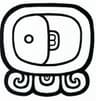
The water droplet and offering; represents emotions, cosmic memory, purification, and karma.

The dog and guide; represents loyalty, heart energy, relationships, and emotional balance.

The monkey and artist; represents play, illusion, creative spark, and curiosity.

The grass and road of life; represents human path, free will, destiny, and community service.

The reed and authority; represents leadership, family foundations, flexibility, and space.

The jaguar and shaman; represents earth energy, feminine wisdom, shape-shifting, and magic.

The eagle and vision; represents higher perspectives, wisdom, prosperity, and mental focus.
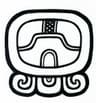
The owl and candle; represents wisdom of the ancestors, deep light, forgiveness, and karma.

The earth and movement; represents cosmic rhythm, intelligence, grounding, and syncronicity.

The obsidian mirror; represents truth, healing cuts, clarity, and reflecting cosmic order.

The storm and community; represents purification, emotional gathering, rain, and rebirth.

The sun and lord; represents enlightenment, universal love, completion, and solar consciousness.
Your Birth Nawal Is Only 1 of Your 5 Sacred Signs
In authentic Mayan astrology, your soul is mapped by a 5-sign quincunx: Conception, Birth, Destiny, Inner Masculine, and Inner Feminine.
Academic & Cultural References
Our exploration of Mayan cosmology, Tzolkin calendrics, and Nawal archetypes relies on historical, archaeological, and ethnographic research supported by institutions such as the Smithsonian National Museum of the American Indian and the Foundation for the Advancement of Mesoamerican Studies (FAMSI).
Primary historical codices and painted manuscripts are referenced from digital archives preserved by the Princeton University Library, the Harvard Peabody Museum CMHI, and the Tulane University Latin American Library. Ongoing scholarship and epigraphy studies are cross-referenced with databases like MesoWeb and the research hubs at The Mesoamerica Center at UT Austin.